Americans are fond of referring to their country as "the greatest nation on earth". Until recently, I didn't believe any country deserved that description. But today I think there is a strong contender for the title.

China is the world's oldest living civilisation. It has recovered from over a century of colonial oppression and lifted its citizens out of poverty. As its growth continues, China is poised to become the world's largest economy and a technology leader that is second to none. By 2030, I believe it will be an indisputable fact that China is the greatest nation on earth.

I need to understand China, from a Chinese perspective. This is my journey.
Showing posts with label Duolingo. Show all posts

Sunday, 20 February 2022

Champion 的 相片 (Champion De Xiàngpiàn)

Duolingo had only taught me that the word for photo was 照片 zhàopiàn.

However, I learnt from a recent Du Chinese lesson (The Watch) that another word for photo is 相片 xiàngpiàn.

A pun came to mind immediately, since triple Olympic medallist Eileen Gu (谷爱凌 Gǔ Ài Líng) is now the talk of the town.

This is a photo of the champion. In other words, 这 是 champion 的 相片 zhè shì champion de xiàngpiàn.

Saturday, 20 November 2021

谢谢, 多邻国! Xiè Xie, Duō Lín Guó! (Thank You, Duolingo!)

I started learning Mandarin through Duolingo on 21 June 2021. Almost exactly 5 months later, on 20 November 2021, I completed all 88 lessons in the course, and 6 levels in each lesson.

Thank you, Duolingo! It's been an incredible learning experience, and I'm immensely grateful.

What next?

Well, I'm going to keep practising the lessons on Duolingo. The spaced repetition algorithm used by the app is a scientifically proven way to get a language into one's long-term memory, so this would be a great safety net to ensure I don't forget what I've learnt.

Of course, I have a few other resources that I will now pay more attention to, to continue to progress with my language learning. Du Chinese is an obvious one. I haven't been spending enough time on Du Chinese for a while, since Duolingo has been taking up about 2 hours of my time every day. With that effort easing up, I can devote more time to Du Chinese and to other online resources that I find on the web. I will post about any interesting ones I find as I go along.

One other interesting thing I've done is download the full set of words that Duolingo covers in its course. Some good souls have made this publicly available as a spreadsheet here.

Being an IT person with some database skills, I loaded this word list into a PostgreSQL database on my computer. The following steps may be useful to anyone who wants to slice and dice the data in ways that a simple spreadsheet cannot do.

create table t_temp
(
hanzi varchar(100) not null,
pinyin varchar(100) not null,
toneless_roman varchar(100),
meaning text
);

The PostgreSQL command to load a CSV-formatted spreadsheet with four columns into the above table looks like this (assuming one has saved the spreadsheet into a CSV file with semicolons as delimiters instead of commas).

\COPY t_temp from t_temp.csv CSV HEADER DELIMITER ';';

Once the data is loaded, here's the neat thing you can do. Use the column 'toneless_roman' to hold the romanised pronunciation of each word - without the diacritical marks that represent the tones. I'll show you why in a moment.

begin transaction;

update t_temp set toneless_roman = pinyin;

update t_temp set toneless_roman = replace( toneless_roman, 'ā', 'a' );
update t_temp set toneless_roman = replace( toneless_roman, 'á', 'a' );
update t_temp set toneless_roman = replace( toneless_roman, 'ǎ', 'a' );
update t_temp set toneless_roman = replace( toneless_roman, 'à', 'a' );

update t_temp set toneless_roman = replace( toneless_roman, 'ē', 'e' );
update t_temp set toneless_roman = replace( toneless_roman, 'é', 'e' );
update t_temp set toneless_roman = replace( toneless_roman, 'ě', 'e' );
update t_temp set toneless_roman = replace( toneless_roman, 'è', 'e' );

update t_temp set toneless_roman = replace( toneless_roman, 'ī', 'i' );
update t_temp set toneless_roman = replace( toneless_roman, 'í', 'i' );
update t_temp set toneless_roman = replace( toneless_roman, 'ǐ', 'i' );
update t_temp set toneless_roman = replace( toneless_roman, 'ì', 'i' );

update t_temp set toneless_roman = replace( toneless_roman, 'ō', 'o' );
update t_temp set toneless_roman = replace( toneless_roman, 'ó', 'o' );
update t_temp set toneless_roman = replace( toneless_roman, 'ǒ', 'o' );
update t_temp set toneless_roman = replace( toneless_roman, 'ò', 'o' );

update t_temp set toneless_roman = replace( toneless_roman, 'ū', 'u' );
update t_temp set toneless_roman = replace( toneless_roman, 'ú', 'u' );
update t_temp set toneless_roman = replace( toneless_roman, 'ǔ', 'u' );
update t_temp set toneless_roman = replace( toneless_roman, 'ù', 'u' );

commit;

Now you can run neat queries like this, which shows you all words that are pronounced "shi", whether the exact tonal pronunciation is shī, shí, shǐ or shì.

And this query is even more useful, because it can show you all words that contain any variant of "shi".

I'm going to be spending a lot of time mulling over the words I've learnt through Duolingo, and quite a bit of that rumination is going to involve SQL queries on these four columns to discover the semantic connections between words. In spite of its tremendous usefulness, Duolingo only provides the main meaning of each word, not its etymology or the literal meanings of compound words. I've posted earlier about some of the fascinating meanings I've discovered, and I'm sure my SQL database will help me discover many more.

Best of all, my database will continue to grow even beyond the vocabulary provided by Duolingo, and I hope to use this as a learning aid indefinitely.

I will post about all the insights I gain from my explorations in this blog, of course.

But for now, 非常感谢,多邻国 fēicháng gǎnxiè, duō lín guó ("Thank you very much, Duolingo").

Tuesday, 16 November 2021

The Simplicity Of Chinese Grammar - 8 (Figuring Out Where The "Brackets" Go)

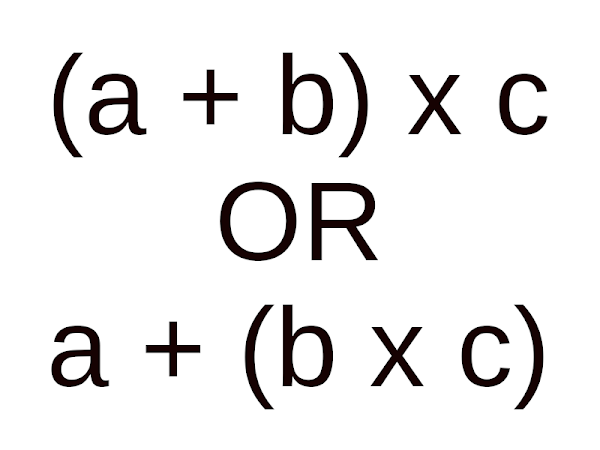
A sentence I recently came across on Duolingo confused me for a while, until I realised there was a very simple and basic rule that I should have used to interpret it. It's like knowing where the brackets go when evaluating a mathematical expression.

But before I talk about the sentence, let me provide an advance hint about the grammatical rule I should have used.

There are two ways a question can be posed in Chinese. One is with the toneless 吗 ma particle at the end of an assertive statement, the other is by immediately following the verb by its negative.

Example:

1. 你 是 中国人 吗?nǐ shì zhōngguórén ma? ("Are you Chinese?", literally "You are Chinese person (question particle)")

2. 你 是不是 中国人? nǐ shìbùshì zhōngguórén? ("Are you Chinese?", literally "You are-not-are Chinese person")

Another example:

1. 你 有 钱 吗?nǐ yǒu qián ma? ("Do you have money?", literally "You have money (question particle)")

2. 你 有没有 钱?nǐ yǒuméiyǒu qián? ("Do you have money?", literally "You have-not-have money")

Remember these two styles of asking a question as I tell you about the sentence I came across on Duolingo.

有没有风险的投资吗?yǒu méiyǒu fēngxiǎn de tóuzī ma?

风险 fēngxiǎn means "risk", and 投资 tóuzī means "investment".

Duolingo's translation was "Is there a risk-free investment?"

I was puzzled. To my mind, this seemed to be asking the very opposite question, "Is there or is there not a risky investment?"

After a long time scratching my head, I realised that I was placing the "brackets" wrongly around the words in this sentence.

This is what I was doing, and I was wrong.

(有没有) (风险 的 投资) 吗?(yǒuméiyǒu) (fēngxiǎn de tóuzī) ma? ("Is there a risky investment?", literally "(Have-not-have) (a risky investment) (question particle)")

But the presence of the 吗 ma at the end should have alerted me to the rule that this was the first style of question, not the second. If languages could use brackets like mathematics, that would be a good way to show which words need to be grouped together. This was how I should have used the "brackets" on this sentence:

有 [ (没有 风险 的) 投资 ] 吗?yǒu [ (méiyǒu fēngxiǎn de) tóuzī ] ma? ("Is there an investment not having risk?", literally "Have a [ (not-have-risk) investment ] (question particle)")

In other words, the correct way to parse this sentence is not "Have you or have you not a risky investment?" but "Have you an investment not having risk?". The "have not" refers to the investment having a risk, not to the broker having such an investment.

What at first seemed to be a confusing sentence turned out to make perfect sense. I had simply forgotten a very basic rule I had learnt early on.

But what if I had in fact wanted to ask if there was a risky investment?

Why, then I should simply drop the 吗 ma from the end of the sentence! Then the 有没有 yǒuméiyǒu ("Have-not-have") would go together.

2. 有没有 风险 的 投资?yǒuméiyǒu fēngxiǎn de tóuzī?

In other words, this would be (有没有) (风险 的 投资)?(yǒuméiyǒu) (fēngxiǎn de tóuzī)? ("Is there a risky investment?", literally "Have-not-have risky investment")

Or I could use the simpler first style, keeping the 吗 ma and dropping the negative-verb 没有 méiyǒu.

1. 有 风险 的 投资 吗?yǒu fēngxiǎn de tóuzī ma? ("Is there a risky investment?", literally "Have risky investment (question particle)")

Saturday, 23 October 2021

The Simplicity Of Chinese Grammar - 7 (Reliably Stable Building Blocks)

I should have posted on this topic a long time ago, but better late than never.

It's fashionable to say that learning Chinese is hard, but I have found it easy right from the start. And that's because its grammar is both simple and logical.

Just take these two simple sentences in English, for example.

1. I love her

2. She loves me

They look very simple to a native speaker of English, but look at these two sentences again from the perspective of a student who knows no English at all.

Notice that when the pronoun changes from being the subject to being the object, it changes form to an unrecognisable extent.

"I" becomes "me". "She" becomes "her".

Notice also that the verb changes slightly.

When the subject is in the singular, the verb is "loves". When the subject is in the plural, the verb becomes "love". And there's an exception too! The subject "I" is singular, but the verb needs to treat it as plural, hence "I love" rather than "I loves".

So many rules and exceptions! They're really hard to remember for a new student of the language.

Now look at the corresponding statements in Mandarin.

1. 我 爱 她 wǒ ài tā ("I love her", literally "I love she")

2. 她 爱 我 tā ài wǒ ("She loves me", literally "She love I")

There is no change in the pronoun regardless of the case in which it is used. And there is no change in the form of the verb regardless of the number or gender of the subject. Check it out:

a. 他 爱 我 tā ài wǒ ("He loves me", literally "He love I"). There's no change to the verb when the gender of the subject changes.

b. 他们 爱 我 tāmen ài wǒ ("They love me", literally "They love I"). There's no change to the verb when the number of the subject changes.

How can one not find this a simple language to learn??

As one of my latest Duolingo lessons averred,

我 觉得 中文 的 语法 不 太 难 wǒ juédé zhōngwén de yǔfǎ bù tài nán ("I think Chinese grammar is not too difficult")

I had no difficulty agreeing with that statement.

Tuesday, 5 October 2021

Two Sides To The Story (面 miàn and 边 biān)

I noticed something interesting about the way directions and sides are named in Mandarin.

Some of them have the suffix 面 miàn and some have the suffix 边 biān.

Examples of 面 miàn:

前面 qiánmiàn ("in front")

后面 hòumiàn ("behind")

里面 lǐmiàn ("inside")

外面 wàimiàn ("outside")

Examples of 边 biān:

旁边 pángbiān ("beside")

左边 zuǒbiān ("on the left")

右边 yòubiān ("on the right")

上边 shàngbiān ("on top")

下边 xiàbiān ("below")

北边 běibiān ("to the north")

南边 nánbiān ("to the south")

东边 dōngbiān ("to the east")

西边 xībiān ("to the west")

So why are certain directions or sides suffixed with 面 miàn and others suffixed with 边 biān?

A good explanation I found was on chinese.stackexchange.com. To reproduce it here (colouring mine):

To understand the differences properly, you need to know what is 面 and what is 边. 面 is a face whereas 边 is an edge. An edge is like a line guiding you [about] the direction. A face is what is facing you giving you a sense of position.

前/后面 is used to describe the position of something within your visual range. Whereas, 前/后边 is more appropriately used to describe something beyond visual range when giving directions.

镜子前面 (in front of the mirror) vs 车站前边 (beyond that bus stop in front)

外/里面 is used to describe location of an object in relation to another object. 外/里边 is used strictly for giving directions.

书包里面 (inside the school bag) vs 巷子里边 (in that alley)

左/右面 is used mainly to point to the left or right face of an object. 左/右边 is used to describe left or right side directions.

墙的左面 (on the left face of that wall) vs 车道左边 (left side of the roadway)

In summary, when you are giving directions, use 边; when you are describing positions, use 面.

I also found other explanations to the effect that the two terms were interchangeable, and it was more a case of regional preference (North China versus South China, or Mainland China versus Taiwan).

I'm not sure which explanation to believe, so I'm going to be conservative and stick to whatever Duolingo taught me, which is the initial list I provided.

Wednesday, 29 September 2021

My Latest Duolingo Milestones

I just crossed Checkpoint 3 on Duolingo (62 out of 88 lessons)...

... and coincidentally completed a 100 day unbroken streak.

Zǒng, The Cute Alien Monster

Learning a language with a non-Roman script provides an added layer of stimulation. I wouldn't exactly call it intellectual stimulation, since it's more often a case of juvenile amusement.

Here's one of the recent characters I came across:

总 zǒng ("total").

When used in a word like 总是 zǒng shì, it means "always". Duolingo's example was topical.

为什么 你 总是 看 手机 wèishéme nǐ zǒngshì kàn shǒujī ("Why do you always look at your phone?")

My mind was elsewhere. The character instantly conjured up a picture of a cute alien monster with antennae and a tail.

I don't know how good my Chinese is going to be, but I'm enjoying the ride and smelling the roses along the way. The méiguīs from planet Zonguo do smell xiāng.

Sunday, 26 September 2021

"Four Eyes" Takes On A Whole New Meaning In Mandarin

When Duolingo introduced the word 眼镜 yǎnjìng ("glasses"), I was surprised and confused. Hadn't I learnt this word before, and didn't it mean "eyes"?

I went back and looked up the vocabulary list that I maintain. Sure enough, the word for eyes was the same - almost.

眼睛 yǎnjīng was the word for "eyes" that I had learnt before. It differed from 眼镜 yǎnjìng ("glasses") only in the second character, and when pronounced, in the tone of the second syllable.

If you use the first (high) tone, it means "eyes". If you use the fourth (falling) tone, it means "glasses".

It drives home to me afresh why tones are so important in Mandarin. Can you imagine the bemused looks on people's faces if you tell them, "I seem to have misplaced my eyes. Have you seen them anywhere?"

你 看见 我 的 眼睛 了 吗?nǐ kànjiàn wǒ de yǎnjīng le ma? ("Have you seen my eyes?")

你 看见 我 的 眼镜 了 吗?nǐ kànjiàn wǒ de yǎnjìng le ma? ("Have you seen my glasses?")

Friday, 10 September 2021

What The Du Chinese Logo Means

When I first signed up to the Du Chinese website, I didn't pay much attention to either the name of the site or the logo. I guess I must have stumbled upon it based on some favourable review, and signed up after skimming through its content.

[No regrets at all, by the way. It's a fantastic resource, and it has nicely complemented Duolingo in enriching my knowledge of the language. Just two of the texts at the elementary level, "Did you do it for nothing?" and the humorous story "The Nose" packed so many useful words and phrases that it greatly accelerated my learning and made future Duolingo lessons easier. You can change the speed at which the text is read. I always run it at half speed, both to understand the text better and to learn the correct tones.]

Just recently, I thought again about the name of the site, and what should have been obvious to me from the beginning finally struck me. 读 dú ("read") is such an obvious name for a site devoted to helping learners read Chinese texts.

And then I looked at the logo again. Sure enough, it was the Chinese character 读 dú, with the top part stylised to make it look like an open book.

我 终于 明白 了 wǒ zhōngyú míngbái le ("I finally understand")

Tuesday, 7 September 2021

It's A Thrill To Be Able To Read An Entire Comment In Chinese!

I'm currently watching another Chinese TV serial "You Are My Hero" (Original Chinese 你是我的城池營壘 nǐ shì wǒ de chéngchí yínglěi, literally "You are my fortress").

After the utterly delightful corporate-romantic drama The Rational Life, I didn't think another one could come close, but this one does.

The series is available on Viki.com as well as on Youtube.

When I went to the Youtube page and scrolled through the comments, I saw this one, which reproduced part of a dialog from the first episode.

To my utter astonishment, I could read every single character in the comment!

白:叫 什么 bái: jiào shénme (Bai: "What's your name?")

马:米 佧 mǎ: Mǐ Kǎ (Ma: "Mi Ka")

白:还有 姓 米 的?bái: hái yǒu xìng mǐ de? (Bai: "I haven't heard such a surname")

马:那我爸姓米,我能怎么办啊 mǎ: Nà wǒ bà xìng mǐ, wǒ néng zěnme bàn a (Ma: "That's my father's surname. What can I do?")

It's an amazing feeling to look up from one's lessons on Duolingo and find that what one has learnt has practical application in the real world.