Americans are fond of referring to their country as "the greatest nation on earth". Until recently, I didn't believe any country deserved that description. But today I think there is a strong contender for the title.

China is the world's oldest living civilisation. It has recovered from over a century of colonial oppression and lifted its citizens out of poverty. As its growth continues, China is poised to become the world's largest economy and a technology leader that is second to none. By 2030, I believe it will be an indisputable fact that China is the greatest nation on earth.

I need to understand China, from a Chinese perspective. This is my journey.

Saturday, 20 November 2021

High-Speed Rail - China's Secret Weapon In The Economic Race

Much has been written about China's economic miracle. Lifting hundreds of millions of people out of poverty into the middle class in a single generation is a feat unprecedented in human history. The recent claim of having eliminated extreme poverty, if valid, is another remarkable milestone.

China continues to grow, and its current efforts to address the inequalities created by its past decades of uneven growth are worth watching. If successful, it would be a model worth emulating by the rest of the world, especially since the failures of both Communism and Capitalism have by now become obvious. "Socialism with Chinese characteristics" may be the economic model of the future.

It's a well known fact that over the past forty years since Deng Xiaoping's economic liberalisation, the provinces on China's eastern seaboard have developed at a much faster pace than the interior. The inequalities in wealth between urban and rural regions, and between coastal and interior provinces, have become a source of potential social conflict, one which the Chinese government is anxious to address. The Belt and Road Initiative is a means to provide better connectivity to interior provinces and thereby spur their development over the next thirty to forty year period. As this wonderfully insightful article by the Lowy Institute describes, there are several drivers, both internal and geo-economic, for the BRI, and if that initiative succeeds, it would have solved more than one problem at the same time.

As one who has studied China with great interest over the past few years, I believe that a crucial element of the country's development strategy is a certain technology, one that has hitherto never been deployed on such a scale anywhere in the world.

That technology is high-speed rail (HSR), and the Chinese government is betting on the multiplier effect that it will have on its economy.

Upon some analysis, I believe this expectation is justified. I created this simple chart to explain why.

There has traditionally been a speed-economy trade-off in the transport sector. Airplanes can get people and goods from place to place faster than any other mode of transport, but air travel is not cheap. At the other end of the scale, trains (and other modes of bulk surface transport) are affordable, but take much longer to connect places together.

Economists often draw a line to indicate the trade-offs inherent in a given portfolio of choices. In investment finance, such a line is called an "efficient frontier". In this chart of the transport sector, the efficient frontier could be thought of as representing a certain generation of technology.

What high-speed rail does is shift the efficient frontier outwards. High-speed rail is emphatically not on the old efficient frontier defined by the existing options of surface and air transport. High-speed rail is much faster than conventional surface transport, and much cheaper than air transport. While it's not quite the best of both worlds (i.e., as fast as air transport and as cheap as conventional rail), it is still a sufficient advancement to represent the next generation in transportation technology, one whose enhanced efficiency can rejuvenate slowing economic growth.

[Even this can change in the near future. The first-generation HSR 和谐号 héxié hào (Harmony) was capable of 350 kmph (operating speed 280 kmph). The second generation 复兴号 fùxīng hào (Rejuvenation) touched 420 kmph (operating speed 350 kmph). Future generations of HSR will probably start to approach aircraft speeds, and at far lower costs. High-speed rail would then be clearly superior to air travel with no trade-off at all.]

I believe that thanks to the aggressive rollout of high-speed railway lines throughout the country (a planned doubling of track length by 2035), the Chinese economy, far from slowing down, is going to continue to grow at a high rate for many years into the future. The less developed interior provinces, specifically Xinjiang, Tibet, Gansu, Inner Mongolia, Ningxia, Qinghai, Sichuan and Yunnan, which have hitherto not had high-speed rail connectivity, will see a boost to their economic growth.

If I were a student of economics wishing to do a doctorate in the area of developmental economics, I cannot think of a more exciting topic than the study of how high-speed rail acts as an economic multiplier to spur growth, and additionally, as a means to balance that growth by pulling far-flung regions into a tighter economic sphere.

High-speed rail is China's secret weapon that can enable it to leapfrog the West in prosperity within 10 to 15 years. The technology has the potential to (1) sustain China's breakneck pace of growth and avoid the "middle-income trap", (2) alleviate the imbalance in regional development and solve the problem of widening inequality that other countries are struggling with, and (3) make China a much more efficient and competitive economic engine, entrenching it in every other's nation's economy.

谢谢, 多邻国! Xiè Xie, Duō Lín Guó! (Thank You, Duolingo!)

I started learning Mandarin through Duolingo on 21 June 2021. Almost exactly 5 months later, on 20 November 2021, I completed all 88 lessons in the course, and 6 levels in each lesson.

Thank you, Duolingo! It's been an incredible learning experience, and I'm immensely grateful.

What next?

Well, I'm going to keep practising the lessons on Duolingo. The spaced repetition algorithm used by the app is a scientifically proven way to get a language into one's long-term memory, so this would be a great safety net to ensure I don't forget what I've learnt.

Of course, I have a few other resources that I will now pay more attention to, to continue to progress with my language learning. Du Chinese is an obvious one. I haven't been spending enough time on Du Chinese for a while, since Duolingo has been taking up about 2 hours of my time every day. With that effort easing up, I can devote more time to Du Chinese and to other online resources that I find on the web. I will post about any interesting ones I find as I go along.

One other interesting thing I've done is download the full set of words that Duolingo covers in its course. Some good souls have made this publicly available as a spreadsheet here.

Being an IT person with some database skills, I loaded this word list into a PostgreSQL database on my computer. The following steps may be useful to anyone who wants to slice and dice the data in ways that a simple spreadsheet cannot do.

create table t_temp
(
hanzi varchar(100) not null,
pinyin varchar(100) not null,
toneless_roman varchar(100),
meaning text
);

The PostgreSQL command to load a CSV-formatted spreadsheet with four columns into the above table looks like this (assuming one has saved the spreadsheet into a CSV file with semicolons as delimiters instead of commas).

\COPY t_temp from t_temp.csv CSV HEADER DELIMITER ';';

Once the data is loaded, here's the neat thing you can do. Use the column 'toneless_roman' to hold the romanised pronunciation of each word - without the diacritical marks that represent the tones. I'll show you why in a moment.

begin transaction;

update t_temp set toneless_roman = pinyin;

update t_temp set toneless_roman = replace( toneless_roman, 'ā', 'a' );
update t_temp set toneless_roman = replace( toneless_roman, 'á', 'a' );
update t_temp set toneless_roman = replace( toneless_roman, 'ǎ', 'a' );
update t_temp set toneless_roman = replace( toneless_roman, 'à', 'a' );

update t_temp set toneless_roman = replace( toneless_roman, 'ē', 'e' );
update t_temp set toneless_roman = replace( toneless_roman, 'é', 'e' );
update t_temp set toneless_roman = replace( toneless_roman, 'ě', 'e' );
update t_temp set toneless_roman = replace( toneless_roman, 'è', 'e' );

update t_temp set toneless_roman = replace( toneless_roman, 'ī', 'i' );
update t_temp set toneless_roman = replace( toneless_roman, 'í', 'i' );
update t_temp set toneless_roman = replace( toneless_roman, 'ǐ', 'i' );
update t_temp set toneless_roman = replace( toneless_roman, 'ì', 'i' );

update t_temp set toneless_roman = replace( toneless_roman, 'ō', 'o' );
update t_temp set toneless_roman = replace( toneless_roman, 'ó', 'o' );
update t_temp set toneless_roman = replace( toneless_roman, 'ǒ', 'o' );
update t_temp set toneless_roman = replace( toneless_roman, 'ò', 'o' );

update t_temp set toneless_roman = replace( toneless_roman, 'ū', 'u' );
update t_temp set toneless_roman = replace( toneless_roman, 'ú', 'u' );
update t_temp set toneless_roman = replace( toneless_roman, 'ǔ', 'u' );
update t_temp set toneless_roman = replace( toneless_roman, 'ù', 'u' );

commit;

Now you can run neat queries like this, which shows you all words that are pronounced "shi", whether the exact tonal pronunciation is shī, shí, shǐ or shì.

And this query is even more useful, because it can show you all words that contain any variant of "shi".

I'm going to be spending a lot of time mulling over the words I've learnt through Duolingo, and quite a bit of that rumination is going to involve SQL queries on these four columns to discover the semantic connections between words. In spite of its tremendous usefulness, Duolingo only provides the main meaning of each word, not its etymology or the literal meanings of compound words. I've posted earlier about some of the fascinating meanings I've discovered, and I'm sure my SQL database will help me discover many more.

Best of all, my database will continue to grow even beyond the vocabulary provided by Duolingo, and I hope to use this as a learning aid indefinitely.

I will post about all the insights I gain from my explorations in this blog, of course.

But for now, 非常感谢,多邻国 fēicháng gǎnxiè, duō lín guó ("Thank you very much, Duolingo").

Tuesday, 16 November 2021

The Simplicity Of Chinese Grammar - 8 (Figuring Out Where The "Brackets" Go)

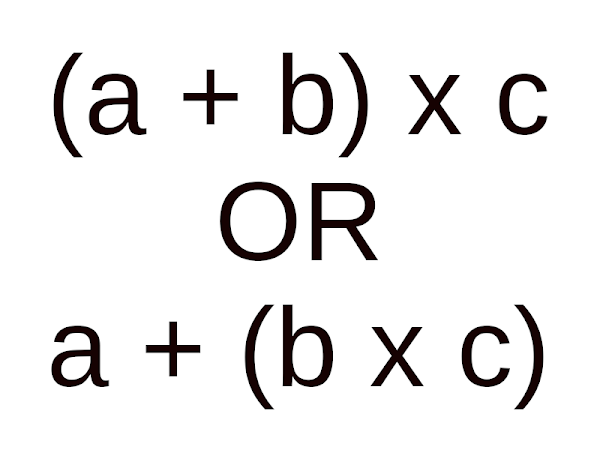
A sentence I recently came across on Duolingo confused me for a while, until I realised there was a very simple and basic rule that I should have used to interpret it. It's like knowing where the brackets go when evaluating a mathematical expression.

But before I talk about the sentence, let me provide an advance hint about the grammatical rule I should have used.

There are two ways a question can be posed in Chinese. One is with the toneless 吗 ma particle at the end of an assertive statement, the other is by immediately following the verb by its negative.

Example:

1. 你 中国人 ?nǐ shì zhōngguórén ma? ("Are you Chinese?", literally "You are Chinese person (question particle)")

2. 你 是不是 中国人? nǐ shìbùshì zhōngguórén? ("Are you Chinese?", literally "You are-not-are Chinese person")

Another example:

1. 你 ?nǐ yǒu qián ma? ("Do you have money?", literally "You have money (question particle)")

2. 你 有没有 钱?nǐ yǒuméiyǒu qián? ("Do you have money?", literally "You have-not-have money")

Remember these two styles of asking a question as I tell you about the sentence I came across on Duolingo.

有没有风险的投资吗?yǒu méiyǒu fēngxiǎn de tóuzī ma?

风险 fēngxiǎn means "risk", and 投资 tóuzī means "investment".

Duolingo's translation was "Is there a risk-free investment?"

I was puzzled. To my mind, this seemed to be asking the very opposite question, "Is there or is there not a risky investment?"

After a long time scratching my head, I realised that I was placing the "brackets" wrongly around the words in this sentence.

This is what I was doing, and I was wrong.

(有没有) (风险 的 投资) ?(yǒuméiyǒu) (fēngxiǎn de tóuzī) ma? ("Is there a risky investment?", literally "(Have-not-have) (a risky investment) (question particle)")

But the presence of the ma at the end should have alerted me to the rule that this was the first style of question, not the second. If languages could use brackets like mathematics, that would be a good way to show which words need to be grouped together. This was how I should have used the "brackets" on this sentence:

[ (没有 风险 的) 投资 ] yǒu [ (méiyǒu fēngxiǎn de) tóuzī ] ma? ("Is there an investment not having risk?", literally "Have a [ (not-have-risk) investment ] (question particle)")

In other words, the correct way to parse this sentence is not "Have you or have you not a risky investment?" but "Have you an investment not having risk?". The "have not" refers to the investment having a risk, not to the broker having such an investment.

What at first seemed to be a confusing sentence turned out to make perfect sense. I had simply forgotten a very basic rule I had learnt early on.

But what if I had in fact wanted to ask if there was a risky investment?

Why, then I should simply drop the ma from the end of the sentence! Then the 有没有 yǒuméiyǒu ("Have-not-have") would go together.

2. 有没有 风险 的 投资?yǒuméiyǒu fēngxiǎn de tóuzī?

In other words, this would be (有没有) (风险 的 投资)?(yǒuméiyǒu) (fēngxiǎn de tóuzī)? ("Is there a risky investment?", literally "Have-not-have risky investment")

Or I could use the simpler first style, keeping the ma and dropping the negative-verb 没有 méiyǒu.

1. 风险 的 投资 yǒu fēngxiǎn de tóuzī ma? ("Is there a risky investment?", literally "Have risky investment (question particle)")

Saturday, 23 October 2021

The Simplicity Of Chinese Grammar - 7 (Reliably Stable Building Blocks)

I should have posted on this topic a long time ago, but better late than never.

It's fashionable to say that learning Chinese is hard, but I have found it easy right from the start. And that's because its grammar is both simple and logical.

Just take these two simple sentences in English, for example.

1. I love her

2. She loves me

They look very simple to a native speaker of English, but look at these two sentences again from the perspective of a student who knows no English at all.

Notice that when the pronoun changes from being the subject to being the object, it changes form to an unrecognisable extent.

"I" becomes "me". "She" becomes "her".

Notice also that the verb changes slightly.

When the subject is in the singular, the verb is "loves". When the subject is in the plural, the verb becomes "love". And there's an exception too! The subject "I" is singular, but the verb needs to treat it as plural, hence "I love" rather than "I loves".

So many rules and exceptions! They're really hard to remember for a new student of the language.

Now look at the corresponding statements in Mandarin.

1. 我 爱 她 wǒ ài tā ("I love her", literally "I love she")

2. 她 爱 我 tā ài wǒ ("She loves me", literally "She love I")

There is no change in the pronoun regardless of the case in which it is used. And there is no change in the form of the verb regardless of the number or gender of the subject. Check it out:

a. 他 爱 我 tā ài wǒ ("He loves me", literally "He love I"). There's no change to the verb when the gender of the subject changes.

b. 他们 爱 我 tāmen ài wǒ ("They love me", literally "They love I"). There's no change to the verb when the number of the subject changes.

How can one not find this a simple language to learn??

As one of my latest Duolingo lessons averred,

我 觉得 中文 的 语法 不 太 难 wǒ juédé zhōngwén de yǔfǎ bù tài nán ("I think Chinese grammar is not too difficult")

I had no difficulty agreeing with that statement.

Thursday, 21 October 2021

Those Pesky Exceptions!

Exceptions to the rules of spelling, pronunciation and grammar are the bane of every language learner. English is particularly horrendous in having no relationship between how words are spelt and pronounced. Thankfully, English is more sensible than many other languages in the way it approaches gender. Hindi and French have two irrational genders. German has three, and randomly allocates genders to nouns without regard to biology. "Das Mädchen" (the girl) belongs to the neuter gender!

So far, I have found a refreshing consistency in pronunciation and grammar in Mandarin, but I have lately come across a few exceptions.

1. 得 is pronounced either or déi, depending on context.

a. 你 在说 太快 nǐ zài shuō tài kuài ("You're speaking too fast")

b. 我 买 票 wǒ déi mǎi piào ("I have to buy a ticket")

In fact, it's not just the pronunciation that changes. It's the meaning too.

2. 长 is pronounced either cháng or zhǎng, depending on context

This isn't actually too bad. When used as an adjective ("long"), 长 is pronounced cháng. When used as a verb ("to grow"), it's pronounced zhǎng.

a. 这条 裙子 太 了 zhè tiáo qúnzi tài cháng le ("This skirt is too long")

b. 孩子 得 真快!háizi zhǎng dé zhēn kuài! ("Children grow up so fast!")

3. 了 can be pronounced either le or liǎo, depending on context

This is a bit more annoying, since a reader tends to read 了 as le most of the time, and would have to read ahead to the next character to understand that it's actually pronounced liǎo.

a. 我 忘记 ! wǒ wàngjì le! ("I forgot!")

b. 你 不 解 我!nǐ bù liǎojiě wǒ! ("You don't understand me!")

4. 行 can be pronounced either xíng or háng, depending on context

This one is really annoying, because it's one of those exceptions one absolutely has to commit to memory.

a. 自车 zìxíngchē (bicycle)

b. 银 yínháng (bank)

5. 和 is pronounced either or huo, depending on context

a. (with)

b. 暖 nuǎnhuo (warm)

Wednesday, 13 October 2021

A Wasted Ideographical Opportunity

Over the last few months, I have seen several amazing examples of Chinese ideographs that perfectly captured an idea with just a few strokes.

But last week, I came across a character that seemed to me to be entirely misapplied. It would have been just perfect to describe something else. I suspect the original person who thought of the ideograph did intend to use it correctly, but later unimaginative scholars couldn't see the obvious picture it was evoking, and applied it wrongly to another concept.

The character is 笔 bǐ, and against all my instincts, it means "pen".

To me, the character screams "scorpion". Just look at it!

How can something that so obviously looks like a scorpion (two pincers/pedipalps, six legs, and a tail) be used to mean something completely unrelated? It makes no sense to me.

I'm actually a bit upset at the waste. 我 很 难过 wǒ hěn nánguò.

I console myself with a mnemonic. The pronunciation of the character 笔 ("bǐ") happens to be the first syllable of the Hindi word बिच्छू bichchhu, which means scorpion. And it also sounds like "Bic", which is a brand of pen.

China dropped the ball there, and India picked it up for half a point.

Wednesday, 6 October 2021

The Mandarin Equivalent Of There, Their And They're

So to add to the confusion of homophones in Mandarin, one of the most common sounds has three different characters with different meanings.

The best explanation I could find on the net was from the TutorMing site.

I'm going to repeat the salient points here, but with some changes in terminology that I hope will make things a bit easier to understand.

There are three characters that are pronounced "de" (no tone, but with one exception I will come to later). They are , and .

Broadly speaking,

A. de qualifies nouns

B. de qualifies verbs

C. de qualifies adjectives

There may be more than one way to qualify a noun, a verb, or an adjective, so let's look at that next.

A1. de as a possessive qualifier for nouns (See my previous post on this):

书 wǒ de shū ("my book")

A2. de as an attributive qualifier for nouns:

a. 红色 书 hóngsè de shū ("red book", literally "red colour-ed book")

b. 英文 说 人 yīngwén shuō de rén ("English-speaking people", literally "English speak-ing people")

B1. de as an adverbial qualifier for verbs:

a. 他 说 中文 很好 tā shuō zhōngwén de hěn hǎo ("He speaks Chinese (de) very well")

This adverbial qualifier can also be attached to comparisons:

b. 冬天 里 北京 比 上海 冷 多 dōngtiān lǐ běijīng bǐ shànghǎi lěng de duō ("In winter, Beijing is much colder than Shanghai", literally "In winter, Beijing compared to Shanghai cold (de) much").

B2. déi as a "must" qualifier for verbs:

我们 买 票 wǒmen déi mǎi piào ("We must buy tickets"). Here, is actually pronounced déi, not de

C. de as an adverbial qualifier for adjectives:

她 高兴 笑 了 tā gāoxìng de xiào le ("She smiled happily", literally, "She happy (de) smiled")

As an exercise for myself, I thought up three ways to say the same thing, using each of the three "de"s:

1. 我 能 说 流利 中文 wǒ néng shuō liúlì de zhōngwén ("I can speak fluent Chinese")

2. 我 能 说 中文 流利 wǒ néng shuō zhōngwén liúlì ("I can speak Chinese fluently")

3. 我 能 流利 说 中文 wǒ néng liúlì de shuō zhōngwén ("I can speak Chinese fluently")